
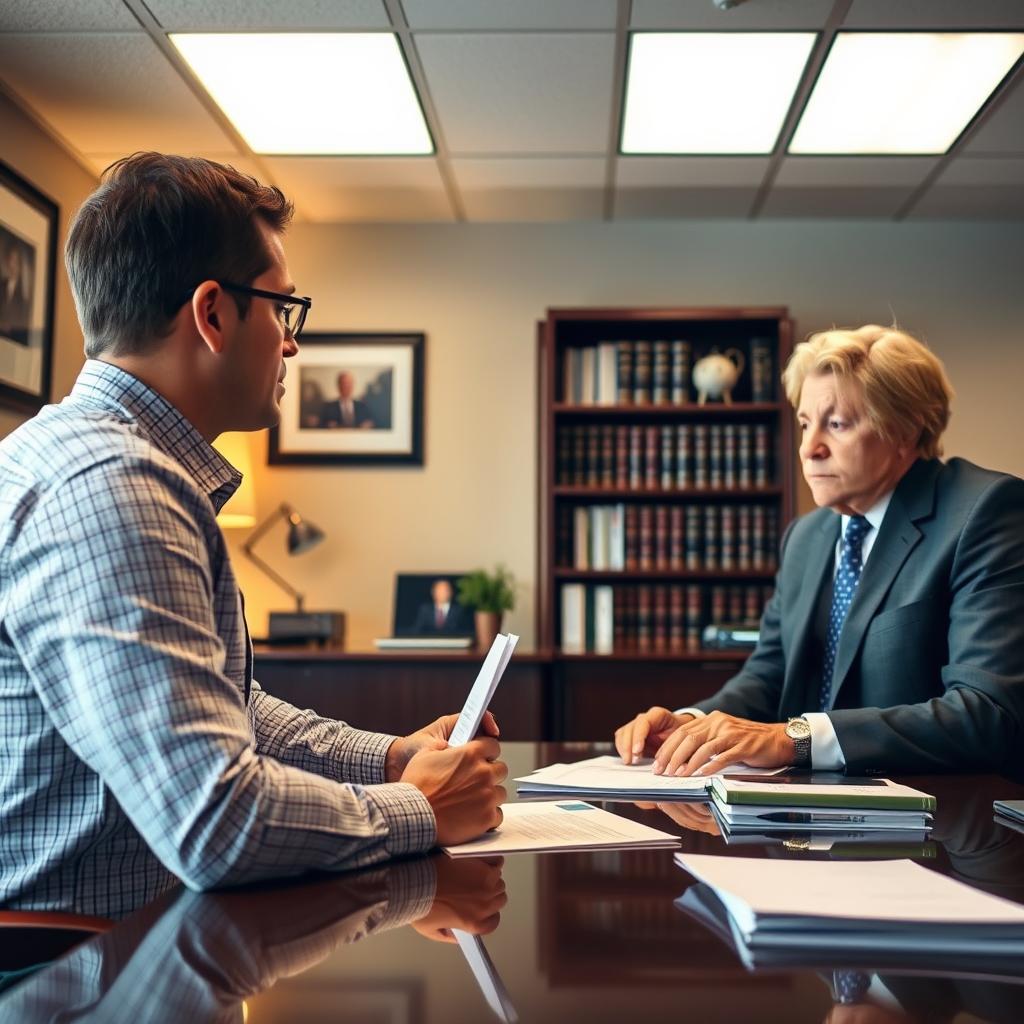
What are the consequences of refusing a breath test in Virginia
When a law enforcement officer in Virginia suspects a driver of driving under the influence (DUI), the interaction activates a set of legal obligations that many drivers do not fully understand. Virginia, like every state, has an implied-consent law — by operating a motor vehicle on a public highway, you are deemed to have agreed to submit to a chemical test of your breath or blood if lawfully arrested for DUI. Refusing that test triggers a separate set of consequences that go beyond whatever happens with the underlying DUI charge. The firm’s attorneys handle breath-test refusal matters across Virginia, helping clients understand their options and working toward a resolution that protects their driving privileges and their record. For a consultation about your specific situation, reach Law Offices Of SRIS, P.C. at (888) 437-7747.
Law Offices Of SRIS, P.C. — Advocacy Without Borders.
What Breath Test Refusal Means in Virginia
Virginia’s implied-consent statute provides that a person arrested for DUI under § 18.2-266 has already consented to a breath or blood test. When a driver refuses to take the test after being informed of the consequences, the refusal itself is treated as a civil offense on a first occurrence, carrying a one-year administrative license suspension. A second refusal within ten years is a Class 2 misdemeanor, and a third or subsequent refusal is a Class 1 misdemeanor. The administrative suspension is imposed by the Virginia Department of Motor Vehicles separately from any criminal penalties that may arise from the DUI charge, and it generally begins immediately upon refusal.
It is important to understand that a refusal does not prevent the Commonwealth from proceeding with a DUI prosecution. The arresting officer’s observations, field-sobriety-test performance, and other evidence may still be used to support a DUI charge. The refusal itself, however, gives rise to its own proceeding — a civil administrative hearing or a criminal charge, depending on the circumstances. This means a single incident can create multiple legal problems. A driver who refused a breath test may face a DUI case in the General District Court and, simultaneously, a license-suspension proceeding before the DMV. Each requires a strategic response.
How Mr. Sris and His Of Counsel Handle Breath Test Refusal Cases
Because breath-test refusal matters involve both administrative and potential criminal consequences, an effective defense addresses the refusal proceeding on its own merits while also protecting the client’s interests in any related DUI case. The firm examines the circumstances of the traffic stop, the arrest, and the refusal advisement to identify issues that can affect the validity of the refusal charge. Virginia law requires that the officer inform the driver of the specific consequences of refusal; a failure to give a proper advisement can be a defense in the refusal proceeding.
In many situations, a favorable result in the DUI case strengthens the driver’s position in the refusal matter, and vice versa. The firm’s approach is to work through each piece of the case methodically. This can include challenging the basis for the initial stop, questioning whether the arrest was supported by probable cause, and examining whether the refusal advisement complied with statutory requirements. Mr. Sris and his Of Counsel bring extensive experience in Virginia traffic courts to these matters, and they work to achieve resolutions that minimize the impact on a client’s license, insurance, and record.
About Mr. Sris and His Of Counsel Team
Mr. Sris, Owner and Founder of Law Offices Of SRIS, P.C., has practiced law since 1997 and is admitted in Virginia, Maryland, the District of Columbia, New Jersey, and New York. A former prosecutor, he understands how the Commonwealth builds its cases and applies that perspective to defending clients in traffic and criminal matters. Mr. Sris maintains a hands-on role in the firm’s cases, and his Of Counsel team — each of whom has extensive litigation experience — supports the firm’s work throughout Virginia’s courts.
Mr. Sris and his Of Counsel bring over 120 years of combined legal experience to breath-test refusal defense, backed by 4,739+ documented firm-wide results. Results may vary. The attorneys appear regularly in Virginia’s General District Courts and Circuit Courts, and they are familiar with the procedural nuances that affect refusal proceedings.
Frequently Asked Questions
What is Virginia’s implied consent law?
Virginia’s implied consent law means that any person who drives on a public highway in the Commonwealth is deemed to have consented to a breath or blood test if lawfully arrested for DUI. The law applies automatically and does not require a driver’s explicit agreement at the time of the stop.
What are the penalties for a first-offense breath test refusal in Virginia?
A first-offense refusal is a civil violation resulting in a one-year administrative license suspension imposed by the DMV. No jail time or criminal penalty attaches to a first refusal, but the suspension is separate from any penalty for the underlying DUI charge.
Can I refuse a breath test in Virginia if I haven’t been arrested?
Virginia’s implied consent law applies only after a lawful arrest for DUI. Before an arrest, you are not required to submit to a preliminary breath test (PBT) at the roadside, though refusing the PBT may be used by the officer as a factor in determining probable cause to arrest.
How can a lawyer help with a breath test refusal charge?
An experienced traffic lawyer can evaluate whether the refusal advisement was properly given, whether the arrest was lawful, and whether any procedural errors exist. The lawyer can also work to resolve the refusal matter in a way that minimizes license and insurance consequences and, where possible, coordinate that resolution with the defense of any related DUI charge.
Does a breath test refusal automatically mean I will be convicted of DUI?
No. A refusal is a separate matter from the DUI charge. The Commonwealth must still prove the DUI charge beyond a reasonable doubt using other evidence. While the refusal may be presented as evidence of consciousness of guilt, it does not by itself establish intoxication.
Related pages:
Traffic lawyer Fairfax County ·
Traffic lawyer Fairfax City ·
Traffic lawyer Prince William County ·
Traffic lawyer Manassas ·
Traffic lawyer Falls Church
Attorney advertising. Prior results do not guarantee a similar outcome.
Results may vary.
Case results depend on a variety of factors unique to each case.